


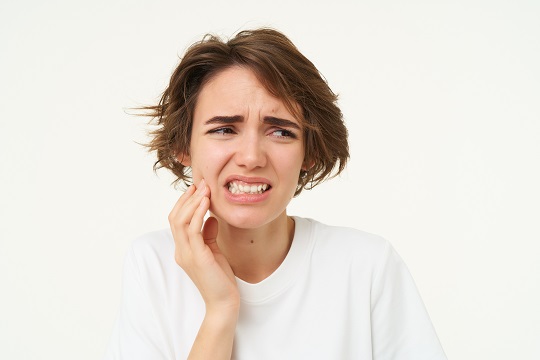
Due to stress and anxiety, more and more people suffer from sleep bruxism or jaw disorders that affect the chewing muscles and the temporomandibular joint or TMJ.
Bruxism
In the case of bruxism, these unconscious movements of the lower and upper arch result in wear on the enamel of the teeth, which in the long run can reduce their size and increase their sensitivity. In some cases, these forces that involuntarily press one arch against another can cause headaches, ear discomfort, joint and muscle pain, gingival retraction, fractures in the teeth and stiffness in the chewing muscles.
The most common solution is the use of a relief splint for sleeping whose main objective is to protect the contact between the teeth and thus stop wear and relax the muscles. However, we understand that care must go beyond the mere dental problem and that is why we recommend our patients practice techniques to reduce stress and tension in the area, which will result in much less pressure on the tooth surfaces.
TMJ
In the case of alterations in the TMJ, although also related to stress, they can be caused by factors outside the nervous system such as arthritis, trauma, hypermobility, dental treatments, hormones, infections, autoimmune diseases or genetic factors. The most recommended treatment is, first of all and if there is a lot of pain or occlusion problems, the application of painkillers with immediate effect and muscle relaxants.
However, in the long run relaxation exercises and the incorporation of relief splints would be highly recommended to reduce pressure on the area. These splints achieve spectacular results and the patient gets rid of pain and improves jaw movements.